
Are You Collecting Stamps or Stories?
Picture this: You’re standing in front of a world-famous monument. The sun is setting, casting a golden glow. It’s perfect. But instead of soaking it in, you’re frantically trying to get the perfect photo, elbowing through a crowd, your mind already racing to the next spot on your jam-packed itinerary. You get the shot, post it, and move on. Later, looking back, you have the picture, but the feeling? It’s a bit hazy.
Now, imagine this instead: You’re sitting in a small, family-run cafe in a quiet neighborhood of that same city. The aroma of freshly baked bread and strong coffee fills the air. You’ve been there for an hour, just watching the world go by, listening to the cadence of a language you don’t fully understand. The owner, a woman with kind eyes, shares a smile and a story about her grandmother’s recipe. There’s no perfect photo, no box to tick, but the memory is vivid, warm, and deeply personal. It’s a chapter in your life story, not just a stamp in your passport.
Which experience resonates more?
If you’re feeling a pull towards the second scenario, you’re not alone. Many of us have felt a growing sense of dissatisfaction with hollow, checklist-style tourism. We come home with a camera roll full of photos but feel strangely empty, as if we saw everything but experienced nothing. This is where mindful travel comes in. It’s the powerful antidote to superficial globetrotting. It’s a philosophy, a mindset focused on being fully present and forging a genuine connection with the world, not just seeing its sights.
In this comprehensive guide, we’ll explore the entire framework of mindful travel—from the philosophy that underpins it to the practical steps you can take before, during, and after your trip. Our goal is to help you transform your journeys from a frantic blur into a series of deep, meaningful, and truly unforgettable experiences. Ready to start collecting stories instead of just stamps? Let’s dive in.
The Philosophy: What is Mindful Travel, Really?
Before we get into the nuts and bolts of planning a trip, it’s crucial to understand the heart of mindful travel. It’s not about where you go; it’s about how you show up. At its core, mindful travel is the practice of bringing your full, non-judgmental attention to your experiences while on the road. It’s about trading distraction for awareness and consumption for connection. Seriously, it changes everything. This isn’t about chanting on a mountaintop (unless that’s your thing!). It’s a practical approach built on a few core principles that shift your entire perspective.
1. Presence Over Performance: Experiencing the Moment
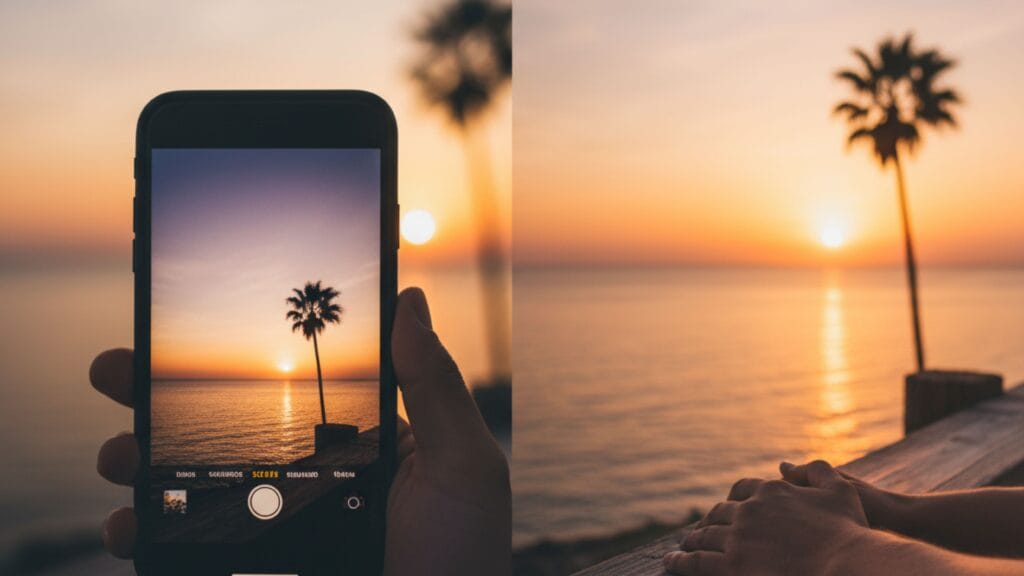
We live in an age of performance. Our trips can easily become content-creation missions, where every view is a potential Instagram post and every meal is curated for its visual appeal. This constant pressure to document and perform pulls us right out of the present moment. We’re so busy proving we had a good time that we forget to actually have a good time.
Mindful travel flips this on its head. It champions presence over performance. It’s the conscious decision to engage all of your senses and truly absorb a moment before you even think about reaching for your camera. It’s the difference between merely seeing a bustling market and truly witnessing it –smelling the spices, hearing the vendors’ calls, feeling the energy of the crowd, tasting a piece of fruit offered to you. It’s about letting the experience imprint on your memory first, not just your memory card. This approach to conscious travel is about collecting feelings, not just photos.
2. Connection Over Checklists: Prioritizing People and Place
The classic tourist mindset is driven by a checklist: Eiffel Tower? Check. Colosseum? Check. Great Wall? Check. While there’s nothing wrong with seeing iconic landmarks, a trip built solely around them can feel like a scavenger hunt. You rush from one point to another, barely scratching the surface of the culture and life buzzing all around you.
Mindful travel encourages us to toss out the rigid checklist in favor of seeking genuine connection. This connection can take many forms. It’s a connection with the local culture—learning about traditions, tasting authentic food, and understanding a different way of life. It’s a connection with nature—taking a quiet hike or simply sitting by the sea. It’s a connection with your travel companions, sharing present moments instead of just navigating logistics. And, perhaps most importantly, it’s a connection with yourself. Travel, when we slow down, provides the space to reflect, learn, and grow. Meaningful journeys are built from these connections, not from a list of completed tasks.

3. Curiosity Over Comfort: Embracing the Unknown
Let’s be honest, comfort zones are… well, comfortable. It’s easy to travel to a new place and immediately seek out the familiar—the food we know, the language we speak, the routines we follow at home. But the magic of travel, the stuff that leads to personal growth and unforgettable stories, rarely happens inside our comfort zone. Not even kidding.
Mindful travel is fueled by curiosity. It’s a willingness to gently push our own boundaries and embrace the unknown. It’s about choosing a local dish you can’t pronounce over a burger and fries. It’s about trying to communicate with gestures and a smile when you don’t know the language. It’s about getting intentionally a little bit lost in a new neighborhood and trusting your ability to find your way back. This open, curious mindset transforms potential moments of anxiety into opportunities for adventure and discovery. It requires a bit of vulnerability, but the reward is a much richer, more authentic travel experience.
The “Before You Go” Framework: Laying the Foundation for Intention
A truly mindful journey doesn’t start when the plane takes off. It begins long before you even pack a bag. The planning phase is your first opportunity to practice intentionality, setting the stage for a deeper and more meaningful experience on the road. By shifting how you prepare, you shift the entire trajectory of your trip. Think of it as tilling the soil before planting the seeds.
4. Choosing Destinations with Purpose
In a world of travel influencers and “Top 10” lists, it’s easy to pick a destination because it’s trending, not because it’s right for you. A mindful approach asks you to turn inward first. Before you start browsing for flights, take a moment to ask yourself some honest questions:
- What am I genuinely seeking from this trip? Is it deep rest and rejuvenation? Thrilling adventure and physical challenge? Intellectual stimulation and historical knowledge? Or is it a human connection and cultural immersion?
- What kind of environment will nourish me right now? Do I need the vibrant energy of a big city, the tranquility of the mountains, the calm of a beach, or the quiet of the countryside?
- What is my “why”? Moving beyond “I just need a vacation,” try to define a deeper purpose. Maybe it’s to challenge a preconceived notion, to learn a new skill, or to spend quality, undistracted time with a loved one.
Aligning your destination with your inner needs is the first step toward a fulfilling trip. When your “where” is connected to your “why,” the entire journey becomes more purposeful. This is a cornerstone of transformative travel.
5. Embracing the Art of Slow Travel
Our modern lives are often a frantic rush, and we tend to carry that pace into our travels. We try to cram five cities into ten days, resulting in a blur of airports, train stations, and hotel check-ins. The antidote to this is slow travel.
Slow travel is exactly what it sounds like: the practice of staying longer in one place rather than hopping between multiple locations. It’s about choosing depth over breadth. The benefits are immense. First, it drastically reduces travel fatigue. You spend less time in transit and more time actually being in a place. Second, it allows you to move beyond the tourist hot spots and discover the rhythm of local life. You can become a “regular” at a local coffee shop, explore neighborhood markets, and build a genuine sense of familiarity. This fosters deeper community connections. Finally, it’s often more sustainable, lowering your carbon footprint from transportation and allowing you to support local economies more directly. Choosing one or two base locations for a longer trip allows for spontaneity and a much more relaxed, immersive experience.
Want to see how to put these ideas into practice? This short video from Wolters World breaks down three simple, actionable tips for mastering the art of slow travel:
6. Researching with Respect: A Deeper Dive
Mindful research goes far beyond creating a list of the best restaurants and museums. It’s an act of respect for the culture you are about to enter. It’s about showing up as a gracious guest, not just a consumer. Before you go, challenge yourself to dig a little deeper:
- Local Customs and Etiquette: Learn about basic social norms. How do people greet each other? What are the customs around tipping? Are there specific dress codes for religious sites? Understanding these small details can prevent unintentional disrespect and open doors to more positive interactions.
- A Pinch of History: You don’t need a PhD, but having a basic understanding of the place’s history will give you a much richer context for what you’re seeing. It transforms a pile of old stones into a story of human triumph and struggle.
- Essential Phrases: Learning even five to ten simple phrases in the local language—”Hello,” “Please,” “Thank you,” “Excuse me,” “Goodbye”—is a powerful gesture. It shows you’re making an effort, and people almost always appreciate it. It can turn a transactional encounter into a moment of human connection.
This deeper level of research prepares you to engage with the destination on its own terms, fostering a sense of humility and respect from the moment you arrive.
7. Packing with Intention: Carry Less, Experience More
The act of packing is a perfect metaphor for our travel mindset. Do we pack for every possible contingency out of fear, weighing ourselves down? Or do we pack with intention and trust, freeing ourselves up? Overpacking creates both physical and mental baggage. It’s a hassle to lug around, and it keeps our minds occupied with “stuff.”
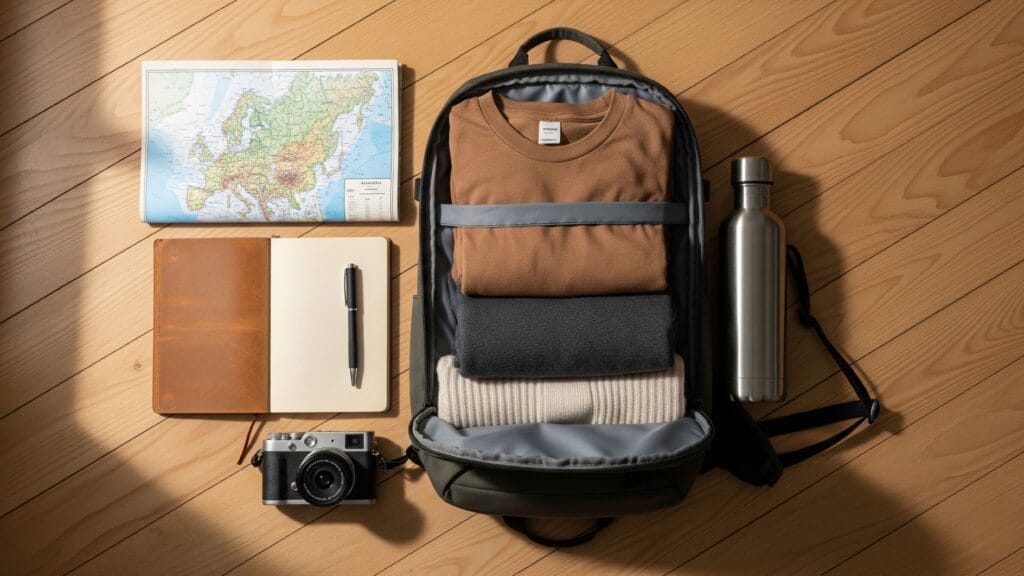
Packing with intention means focusing on versatility and function. It’s about choosing items that can be mixed and matched and serve multiple purposes. Think about creating a small, functional travel capsule wardrobe. By packing less, you free up physical space and, more importantly, mental energy. You spend less time worrying about your outfits and more time focusing on the world around you. Embracing a more minimalist approach to your luggage is a surprisingly powerful way to set a mindful tone for your entire trip. If you need inspiration, check out our guide on packing a versatile travel capsule wardrobe for your next adventure.
The “While You’re There” Practices: A Toolkit for Presence
You’ve done the intentional prep work. You’ve arrived with a curious mind and a light bag. Now, how do you maintain that mindful state amidst the excitement and potential chaos of being in a new place? This section is your practical toolkit—a set of simple, actionable techniques to anchor you in the present moment and deepen your connection to your surroundings. These aren’t chores; they’re invitations to experience your journey more fully.
8. The Five-Senses Arrival Ritual
When you first arrive in a new city or hotel room, the instinct is often to immediately unpack, connect to Wi-Fi, or start planning your first move. Instead, try this powerful grounding exercise. Find a comfortable spot—a park bench, a cafe table, or even just a chair by your window—and perform a five-senses check-in. The goal is to simply notice, without judgement.
- Five things you can SEE: Let your gaze wander. Notice the big things (the architecture, the color of the sky) and the small details (a crack in the pavement, the pattern on a leaf, the way the light hits a wall).
- Four things you can FEEL: Tune into the physical sensations. Feel the texture of the bench beneath you, the warmth of the sun or the cool of the breeze on your skin, the weight of your shoes on the ground, the fabric of your clothes.
- Three things you can HEAR: Listen closely. Beyond the obvious sounds, what can you discern? The distant chime of bells, the murmur of conversations in a foreign language, the rustle of leaves, the hum of traffic.
- Two things you can SMELL: Take a deep breath. What scents are in the air? The aroma of street food? The saltiness of the sea? The perfume of blooming flowers? The faint smell of rain on asphalt?
- One thing you can TASTE: What is the lingering taste in your mouth? Maybe it’s your morning coffee or toothpaste. You could even have a sip of water or a small snack to consciously notice its flavor.
This simple ritual, which takes only a few minutes, pulls you out of your travel-addled brain and plants you firmly in your new environment. It’s a reset button that kick-starts your practice of mindful travel.
9. A Conscious Digital Detox
Our smartphones are incredible tools, but they are also presence-killers. It’s nearly impossible to be fully immersed in a new place when you’re simultaneously scrolling through someone else’s life back home. A mindful travel experience requires a conscious effort to manage your technology. This doesn’t mean you have to abandon your phone entirely, but it does mean setting boundaries.
- Set “Digital Windows”: Designate specific, short times to check messages and social media—perhaps once in the morning while you have coffee and once in the evening before dinner. The rest of the day, keep your phone on airplane mode.
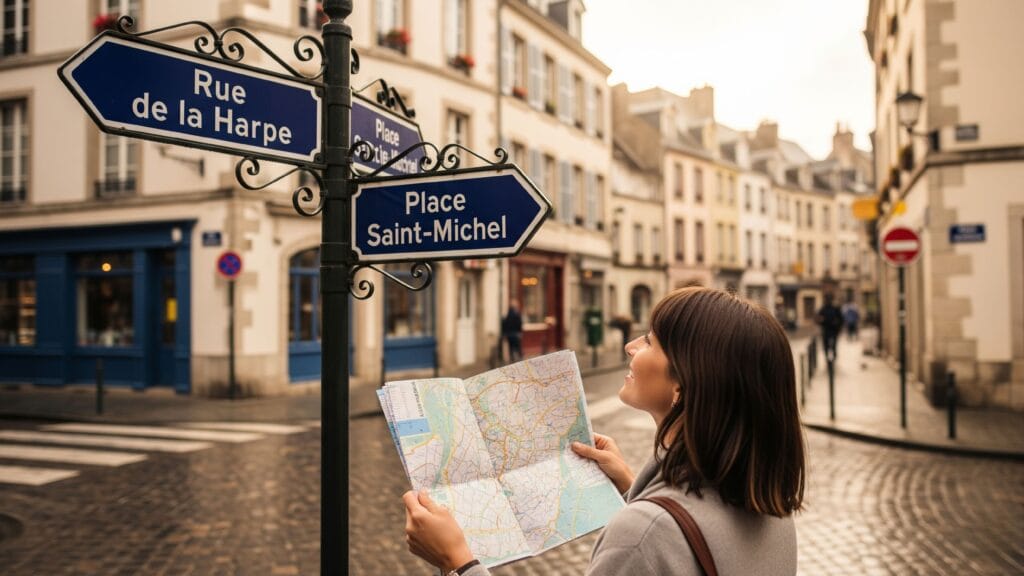
- Use a Physical Map: Instead of relying on Google Maps, try navigating with a paper map. It forces you to look up, pay attention to street names and landmarks, and even ask locals for directions—a fantastic way to spark an interaction.
- Practice “Phone-Free” Meals: Make a rule that phones are not allowed at the table during meals. This allows you to fully savor your food and engage in conversation with your companions. If you’re dining alone, it’s an opportunity to people-watch and soak in the ambience.
A digital detox isn’t about deprivation; it’s about reclaiming your attention so you can give it to the incredible, once-in-a-lifetime experiences happening right in front of you.
10. Connecting with Local Culture, Ethically
One of the most rewarding aspects of travel is connecting with local culture, but it’s essential to do so in a way that is respectful and beneficial to the community. Ethical tourism is a key component of mindful travel. It’s about ensuring your presence has a positive impact.
- Eat and Shop Local: Seek out locally-owned restaurants, cafes, and shops instead of international chains. Your money goes directly into the hands of the community, and you get a much more authentic taste of the local flavor and craftsmanship. Explore local markets—they are often the beating heart of a city.
- Hire Local Guides: When booking tours, choose local, independent guides or small, locally-run companies. They offer unparalleled insight into their home culture, and your money supports them directly. Platforms dedicated to sustainable tourism can be a great resource.
- Use Public Transportation: Taking the local bus, tram, or subway is not only cheaper and better for the environment, but it’s also an incredible immersion experience. You get a real slice of daily life.
- Ask Before You Photograph: This is a big one. Always ask for permission before taking a photo of a person, especially of children. A smile and a gesture of pointing to your camera is a universal language. Remember, people are not tourist attractions; they are individuals deserving of respect.
These practices shift you from being a passive consumer to an active, respectful participant in the local culture.
11. Embrace Spontaneity: The “No-Plan” Afternoon
Even the most well-intentioned itineraries can become a kind of prison, rushing you from one obligation to the next. The most magical travel moments are often the ones you could never have planned. Serendipity needs space to happen.
To create this space, intentionally schedule a block of time — a whole morning or an entire afternoon — with absolutely nothing on the agenda. No museums, no tours, no reservations. This is your “No-Plan” time. The only rule is to be open. Let your curiosity be your guide. Follow an interesting-looking alleyway. Wander into a park and just sit. Follow the sound of music. Step into a random shop that looks intriguing. This is where you might discover your favorite hidden gem, have an unexpected conversation, or simply find a moment of perfect peace. This is the essence of slow travel in practice.
12. Mindful Eating on the Road
Food is one of the most direct and delicious ways to experience a new culture. But too often, we eat on the go, distracted by our phones or already thinking about the next activity. Mindful eating on the road transforms a simple meal into a rich cultural and sensory experience.
- Savor Every Bite: Eat slowly. Pay attention to the flavors, textures, smells, and colors of the food. Try to identify different ingredients and spices.
- Ditch the Distractions: Put your phone away. Focus on the food and your surroundings. Notice the decor of the restaurant, the chatter of other diners, the presentation of the dish.
- Learn the Story: Be curious about the food. Ask the server or a local what the story is behind a traditional dish. Where did it originate? When is it typically eaten? Food is a gateway to history, agriculture, and family traditions.
Treating each meal as a mindful practice not only enhances your enjoyment but deepens your appreciation for the local culture. You could even try a local cooking class to take the experience a step further.

The “After You Return” Integration: Weaving the Journey Home
The trip might be over, but the journey isn’t. Not even close. So often, we return from a wonderful trip, and within a week, the magic has faded, swallowed up by the relentless return of routines and responsibilities. The true value of transformative travel is realized after we unpack. It’s about intentionally integrating the lessons, perspectives, and feelings from our journey into our daily lives, ensuring the experience creates a lasting positive change.
13. Journaling for Insight, Not Itineraries
Once you’re home, set aside some time to reflect on your trip with a travel journal. But instead of just creating a chronological log of what you did (“On Tuesday, we went to the museum…”), use your journal for deeper insight. This practice helps you distill the meaning from your memories. Use prompts that encourage reflection:
- What surprised me most about the place I visited? What surprised me most about myself?
- What local custom, perspective, or way of life challenged my own assumptions? Exploring these moments is a powerful way of challenging your own perspectives on the world.
- Describe a moment when I felt completely present and happy. What were the sensory details of that moment?
- What is one small daily practice or habit from my trip that I could incorporate into my life at home? (e.g., a leisurely afternoon coffee, a daily walk, eating more slowly).
- Who was the most interesting person I met, and what did I learn from them?
This kind of reflective journaling cements your experiences and helps you understand the ways in which the journey has changed you. It’s a conversation with the person you were before you left.

14. Sharing Stories, Not Just Snapshots
When friends and family ask, “How was your trip?” the default response is often a quick “It was great!” followed by a slideshow of photos on your phone. This rarely does justice to the experience. A mindful approach to sharing is about conveying the feeling, not just the facts.
Instead of a chronological dump of photos, try sharing a single story. Talk about the kind woman in the cafe, the hilarious moment you got lost and ended up discovering a beautiful hidden courtyard, or the profound feeling of watching a sunrise from a mountaintop. Share the one insight or lesson that has stuck with you the most. This method of storytelling is far more engaging for your listeners and helps you re-live the most meaningful moments of your trip. It honors the depth of your journey and invites others into the experience in a more authentic way.
15. Bringing the Journey’s Lessons into Your Life
This is the final, most crucial step: making the transformation last. A mindful travel experience can be a powerful catalyst for positive change in your everyday life. The key is to consciously identify the best parts of your travel self—the more present, curious, and relaxed version of you—and find ways to bring that person home.
- Did you enjoy the slower pace of life? Look at your weekly schedule. Where can you intentionally build in unscheduled time? Maybe it’s a “No-Plan Sunday Afternoon” or a commitment to not over-scheduling your evenings.
- Did you feel more connected to nature? Make it a priority to schedule more time outdoors at home. Explore local parks, plan weekend hikes, or even just start a small herb garden on your windowsill.
- Did you love discovering new foods? Make a point to cook a new recipe from the country you visited or explore a different ethnic grocery store in your own city.
The goal is not to live in a permanent state of vacation but to use the lessons from your travels to enrich your daily existence. By integrating these practices, the benefits of your journey continue to ripple outward long after you’ve returned.
Your Next Journey Begins Within
In the end, what we’ve explored throughout this guide is a simple but profound shift in perspective. Mindful travel is not a special type of trip reserved for exotic destinations or month-long sabbaticals. It is a special type of attention that you can bring to any journey—whether it’s a trip across the globe, a weekend getaway to a nearby town, or even just a walk through your own neighborhood with fresh eyes.
It’s about understanding that the most memorable souvenirs are not things we buy, but moments we fully inhabit. It’s the practice of moving through the world with more presence, more curiosity, and more connection. It transforms travel from a frantic act of consumption into a nourishing practice of discovery—discovery of the world, and of ourselves.
This is not a system to be perfected overnight. It is a practice, and like any practice, it builds with time and intention. So, on your next trip, don’t worry about doing it all “right.” Just choose one or two ideas from this handbook to focus on. Maybe it’s the five-senses ritual upon arrival or the commitment to a phone-free dinner. Small steps lead to big changes. The most important journey, after all, always begins within.
What is one principle from this handbook you will apply to your next trip? Share your commitment in the comments below—we’d love to hear about your journey!