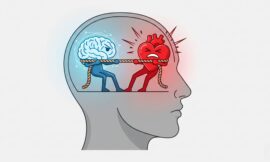
The lessons chess teaches extend far beyond the 64 squares on the board. They provide a powerful framework for making smarter decisions, especially when your team or business is stuck in the mental quicksand of a big choice—a new market to enter, a major product pivot, or a difficult strategic shift.
What if a framework for making smarter, more confident decisions has existed for centuries? It’s not a new management trend; it’s the game of chess. The principles of this ancient game are a key part of what we explore in our complete guide, The Intellectual’s Gambit: How Mastering Chess Unlocks a Sharper, More Strategic Life. This post will break down five of the most practical lessons from that framework—lessons that build not just better players, but better thinkers.
Before we break down the five key lessons, let’s hear from a master of the craft. In this insightful interview, five-time World Chess Champion Viswanathan Anand discusses the intense focus and mental clarity required to compete at the highest level. His approach to the game is a perfect masterclass in the very decision-making principles we are about to explore.
Lesson 1: The Art of Thinking Ahead ( Mastering Future Consequences )
The Chess Principle
In chess, it’s quickly apparent that making a move solely based on its immediate appeal is a strategy for failure. That’s first-order thinking. Strong players look several moves ahead. They consistently ask, “If we make this move, what is our opponent’s most likely reaction? What is our best response to that reaction? And what will follow?” This skill of looking past the immediate result is often called “second-order thinking,” a mental model used by top investors and strategists. Many of the most important lessons chess teaches revolve around this single, powerful idea of foresight.
The Life Application
Let’s translate this to a business scenario. A competitor drops their price, and the immediate impulse is to match it. That’s the first-order thought: “We must compete on price to keep customers.” But let’s apply some chess-level strategic thinking.
- And then what? Our profit margins shrink dramatically. This could impact Q3 earnings and shareholder confidence.
- And then what? With less capital, we may have to pause R&D on our next-generation product, ceding future market leadership.
- And then what? The price war erodes brand value, teaching customers to see our product as a commodity, not a premium solution.
Evidence suggests that the “obvious” choice isn’t always the wisest. This is one of the most crucial lessons chess teaches: the optimal decision is rarely the one that provides immediate relief. It’s about understanding the chain reaction of consequences. You aren’t just making one move; you’re shaping the landscape for the next five.
Actionable Tip
Before any significant strategic decision, convene your team and conduct a formal “And Then What?” analysis. For every proposed action, map out the potential consequences to the third degree. This simple exercise elevates decision-making skills from reactive to strategic, revealing hidden risks and opportunities.
Lesson 2: The Power of the “Quiet Move” ( Choosing Patience Over Panic )
The Chess Principle
Not every situation on the chessboard requires a dramatic, piece-capturing attack. In fact, some of the most powerful moves are “quiet moves.” These are subtle, preparatory actions that don’t immediately alter the balance of power. A quiet move might be advancing a pawn to control a key square or repositioning a bishop to a more influential diagonal. It’s a move of patient preparation. It’s about building a superior structure so that when the decisive moment comes, your position is overwhelmingly strong.
The Life Application
Our world often rewards reactive, flashy moves. A new social media trend explodes, and the impulse is to divert the entire marketing budget to it. That’s a panic move. The “quiet move”? That might be to continue investing in building your email list or improving customer service—actions that build long-term brand loyalty. It’s not glamorous. It won’t make headlines. But it creates a stable foundation immune to fleeting trends. Practicing this kind of patience actively strengthens your executive functions, the set of mental skills that include self-control and future planning. This is one of the key lessons chess teaches: sustainable strength is built through quiet, consistent effort, not just loud, sporadic bursts.
Actionable Tip
Institute a “48-Hour Hold” policy for all non-critical, reactive business decisions. A competitor launches a new feature? A negative comment appears online? Put it on a 48-hour hold. This creates a mandatory buffer between the external stimulus and your organizational response, allowing for a more rational, strategic choice.
Lesson 3: The Strategic Sacrifice ( Short-Term Pain for Long-Term Gain )
The Chess Principle
This is one of the lessons chess teaches that feels counterintuitive. A “strategic sacrifice“ in chess involves intentionally giving up a piece to achieve a more significant, long-term advantage. One might sacrifice a knight to expose the opponent’s king or give up a pawn to open a critical line for a rook. It is a calculated trade-off. It’s the conscious acceptance of a short-term loss for a decisive long-term gain.
The Life Application
This principle is the very essence of strategic investment and delayed gratification. Research into self-control, famously demonstrated in the Stanford marshmallow experiment, shows that the ability to delay a small, immediate reward for a larger one later is a key predictor of long-term success. In business, this looks like:
- Sacrificing short-term profits by investing heavily in R&D to dominate the market in five years.
- Sacrificing current operational “comfort” by undergoing a difficult digital transformation.
- Sacrificing a small, stable market to pivot the entire company towards a new, high-growth sector.
These are the difficult, courageous lessons chess teaches, but our analysis indicates they are the moves that separate market leaders from the rest of the pack.
Actionable Tip
In your next quarterly planning session, identify one “strategic sacrifice.” Ask: “What short-term comfort can we consciously de-prioritize for the next 90 days to achieve a specific, significant long-term goal?” This makes the principle an active part of your strategy.
Lesson 4: Adapt Your Plan ( Valuing Flexibility Over Dogma )
The Chess Principle
Every chess player begins with an opening plan. However, a plan is merely a guide. As soon as the opponent responds in an unexpected way, the board state changes. The losing player is the one who rigidly adheres to their original plan, ignoring the new reality. The winning player adapts. They assess the board for what it is, not what they hoped it would be. In chess, flexibility is paramount.
The Life Application
How many corporate “five-year plans” are obsolete by year two? A rigid plan can be a dangerous liability in a volatile market. A business strategy might be perfect on paper, but if a disruptive new technology emerges or consumer behavior fundamentally shifts, clinging to the old plan is a recipe for failure. The winning approach is what is often termed ‘strategic agility.’ This is the organizational capacity to sense and respond to market changes effectively. This is one of the most vital lessons chess teaches for modern leadership. To learn more about our strategic frameworks, feel free to browse the articles on our Blog page.
Actionable Tip
Schedule a quarterly 30-minute “Plan Invalidation” meeting. The goal is not to review the plan, but to actively try to poke holes in it. Ask one question: “Based on what we know today that we didn’t know 90 days ago, what part of our current plan is now invalid or suboptimal?” This fosters a culture of critical assessment and adaptability.
Lesson 5: Embrace the “Blunder Analysis” ( Learning From Your Losses )
The Chess Principle
Here is a core secret from the world of chess masters: the fastest path to improvement is not celebrating wins, but dissecting losses. After a defeat, a serious player analyzes the game to locate the “blunder”—the critical error. The analysis goes beyond what the mistake was to understand why it was made. Was it a calculation error? Overconfidence? Time pressure? This ruthless “blunder analysis” is fundamental to growth.
The Life Application
This process of analyzing mistakes not as failures but as data points for learning is the core tenet of developing a “growth mindset,” a concept famously researched by Stanford psychologist Carol Dweck. When a project fails or a product launch underperforms, the instinct can be to assign blame or move on quickly. This is a wasted opportunity. Instead, conduct a “blunder analysis.” This creates a psychologically safe environment to ask: “What was our flawed assumption? Where did our process break down? How do we ensure we learn from this?” If you wish to understand the philosophy that guides our work, you can learn more on our About page.
This is the final and perhaps most profound of the lessons chess teaches: your failures contain the invaluable data needed for your future victories.
Actionable Tip
After any initiative that yields a poor result, formalize the post-mortem process. In a no-blame environment, have the team collectively answer one question in a shared document: “What was the single most significant flawed assumption we made, and what is one concrete process change we will implement to prevent it from happening again?” This turns a loss into a tangible, long-term asset.
Conclusion: Make Your Next Move with Confidence
The chessboard is far more than a game; it is a powerful simulator for strategic thought. By embracing these five lessons chess teaches—thinking in second-order consequences, practicing patience, making strategic sacrifices, remaining adaptable, and learning from every error—your team can build a formidable toolkit for navigating a complex world.
One does not need to be a grandmaster to think like one. Our analysis suggests that by integrating these chess principles in life and business, any leader can make decisions with greater clarity, courage, and confidence.
Now, we invite you to discuss. Which of these five lessons is most relevant to the challenges your organization faces right now? Share your team’s thoughts in the comments below!