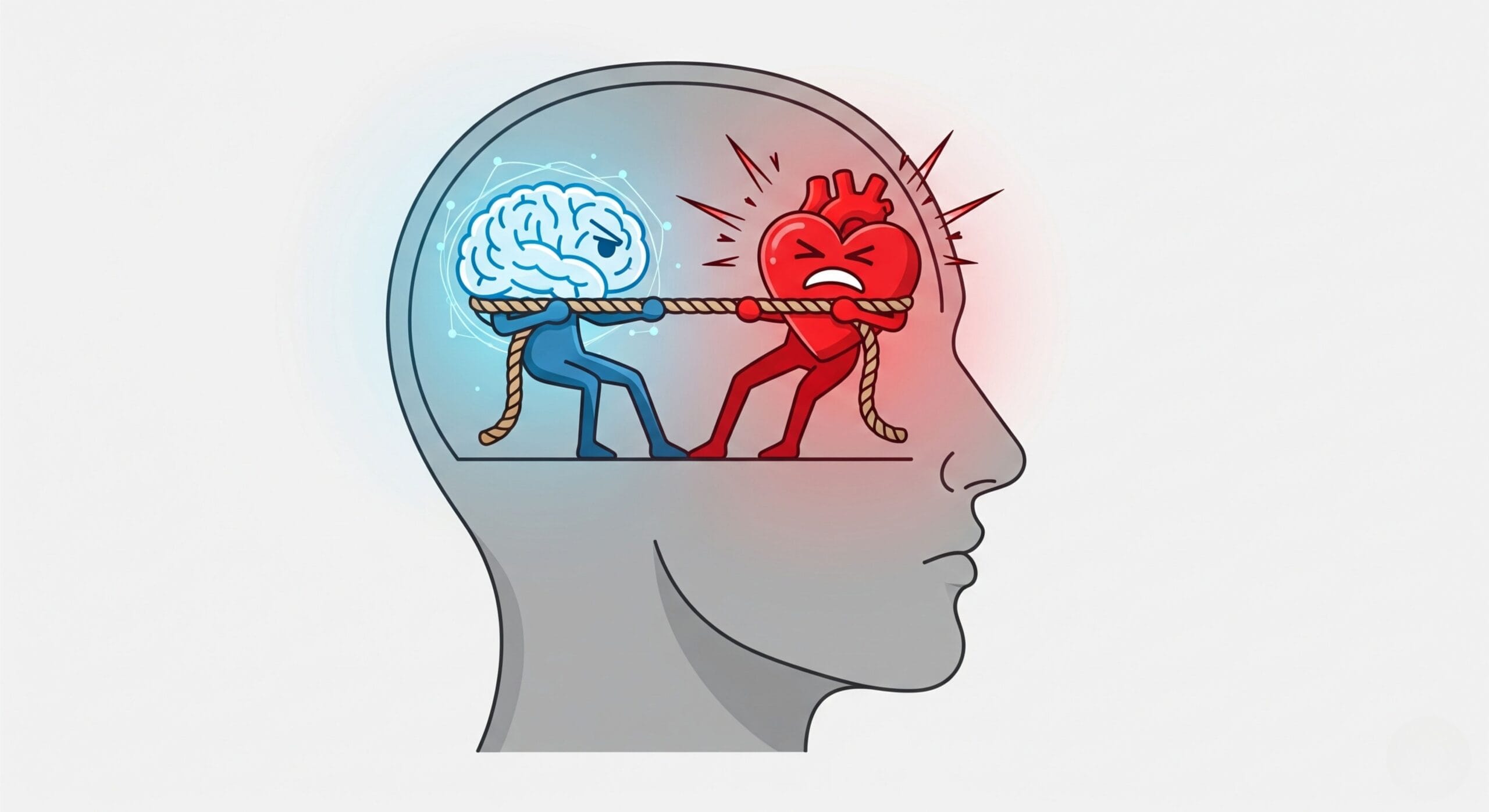
The Secret Mental Tug-of-War You’re Losing (And How to Win)
Have you ever found yourself in a situation that felt… well, a little weird? You promised yourself you’d hit the gym, but somehow you ended up on the couch with a pint of ice cream, binge-watching a new series. And then comes that nagging, uncomfortable feeling in the back of your head. It’s not quite guilt, not quite regret, but it’s definitely there. Seriously though, what is that?
What if we told you that feeling has a name? It’s called cognitive dissonance, and it’s one of the most powerful psychological forces shaping your daily life. It’s the brain’s built-in alarm system that goes off when your beliefs and your actions are throwing a party on opposite sides of town.
This guide isn’t just a boring definition. Nope. We’re going to dive deep into what cognitive dissonance is, how it secretly runs your decisions, and most importantly, how you can make it work for you instead of against you. Let’s figure out what’s really going on in our heads!
So, What is Cognitive Dissonance, Really?
Okay, let’s break it down. At its core, cognitive dissonance is the mental discomfort we feel when we hold two or more contradictory beliefs, or when our beliefs don’t match our behavior. Our brains are hardwired to love consistency. They want everything to line up nicely, like a perfectly organized bookshelf. When things are inconsistent, our brain freaks out a little and creates a state of tension.

Imagine this: you consider yourself an honest person (Belief #1), but you just told a little white lie to get out of a meeting (Action #1). That’s a clash! Your brain feels that tension and immediately wants to resolve it. This sneaky force is what pushes us to either change our actions or, more often than not, change our beliefs to make ourselves feel better.
Real-World Examples of Cognitive Dissonance in Action
This isn’t some abstract theory; it happens to all of us, every single day. Once you see it, you can’t unsee it.
The “Just One More” Slice of Pizza
You’ve been dedicated to your health goals all week. You know that eating a whole pizza isn’t part of the plan (Belief: “I want to be healthy”). But it’s Friday night, you’re tired, and that pizza just looks too good (Action: You eat it anyway). The cognitive dissonance kicks in. To reduce the discomfort, your brain starts justifying:
- “I deserved a cheat meal.”
- “It’s just this one time, no big deal.”
- “I’ll work out extra hard tomorrow to burn it off.”
See? Your brain just changed your belief system to make your action feel okay. Not even kidding, it’s that clever.
Want to see these concepts explained by a social psychologist? This fantastic video breaks down the classic experiments and theories.
The Agony of Buyer’s Remorse
You finally splurge on that expensive new pair of wireless Bluetooth headphones you’ve been eyeing. You get home, and the initial thrill wears off. You start thinking, “Was this really worth the money? Maybe I should have waited.” (Belief: “I should be smart with my money.”) The dissonance between your belief and your action (the big purchase) is real.
To fix this, you’ll start hunting for confirmation. You’ll read glowing five-star reviews, watch unboxing videos that praise the headphones, and tell all your friends how amazing the sound quality is. You’re not just trying to convince them; you’re convincing yourself to make the dissonance go away.
When Your Heroes Let You Down
Have you ever been a huge fan of a celebrity, a brand, or even a friend, and then they do something that goes against your values? (Belief: “This person is good.”) (New Information: “They did a bad thing.”) The mental conflict is intense. You either have to change your belief about them or justify their actions. This is a powerful example of how cognitive dissonance can influence our relationships and loyalties. It’s a bit like The Halo Effect, where one good trait makes us see everything else in a positive light, but in reverse!
How to Actually Handle Cognitive Dissonance (Your Action Plan)

Alright, so our brains are constantly trying to trick us into feeling comfortable. That’s fine, but what if we want to make better choices instead of just justifying our bad ones? Being aware of cognitive dissonance is your new superpower. Here’s how to use it.
- Recognize the Feeling: That squirmy, uncomfortable feeling is your cue. When you feel it, pause and ask, “What’s clashing here? Is my action not matching my values?”
- Change Your Behavior: This is often the hardest but most effective route. If you feel dissonance after smoking a cigarette because you value your health, the most direct way to resolve it is to work on quitting.
- Challenge Your Justifications: When you hear that little voice in your head saying, “It’s no big deal,” challenge it. Ask yourself, “Is that really true, or am I just trying to make myself feel better?”
- Add New, Empowering Beliefs: Instead of justifying a bad habit, you can add a new belief that supports the change you want to make. For example, if you want to exercise more, you could focus on the belief that “Even a 10-minute walk is a huge win for my mental health.”
Understanding this process is a cornerstone of living a more intentional life, a concept we explore deeply in our guide, A Blueprint for a Smarter Life.
The Marketer’s Secret Weapon
Here’s a little inside scoop: marketers absolutely love cognitive dissonance. They use it to build brand loyalty and ensure you feel great about your purchases. After you buy a car, you’ll often get a follow-up call from the dealership congratulating you on your excellent choice. When you sign up for a service, they’ll send you a welcome email packed with testimonials from happy customers.
They aren’t just being nice. They are actively working to reduce your potential buyer’s remorse. By reinforcing the idea that you made a smart decision, they are resolving any dissonance you might feel, turning you into a loyal, long-term customer.
Your Final Takeaway: You’re in Control
Cognitive dissonance isn’t a flaw; it’s just a feature of the human mind. It’s a mental signal that something is out of alignment. The trick is to learn how to listen to it. Instead of letting your brain automatically justify your actions, you can use that feeling of discomfort as a compass. It can point you toward decisions that are more in line with your true values and goals.
By understanding this mental battle, you gain a massive advantage in everything from building better habits to making smarter financial decisions. It’s a core concept we explore in our library of All Guides, and if you want to learn more about our mission, check out our About page!
What’s a time you felt that mental tug-of-war? Share your story in the comments below—we’d love to hear it!