Have you ever watched those intense chess players in the park, their eyes darting across a checkered battlefield, and thought, “What’s really going on in their heads?” Or maybe you binged “The Queen’s Gambit” and suddenly had the urge to buy a chessboard. Seriously though, there’s a magnetic pull to this ancient game. But let’s be real, you’re busy. You have goals to crush, a career to build, and a life to live. Why on earth should you invest your precious time in learning a game with funny-looking pieces?

Here’s the secret: chess is so much more than a game. It’s a gymnasium for the mind, a powerful blueprint for navigating the beautiful, messy complexities of modern life. It’s about learning to think, not just what to move. This guide isn’t about memorizing a thousand different openings. Nope. This is your definitive resource on why mastering chess is the single most powerful decision you can make for your personal and professional growth. We’re going to explore how this 1,500-year-old pastime rewires your brain for success and provides a framework for achieving your biggest goals. The journey to mastering chess is a journey to mastering yourself. So, grab a cup of coffee, get comfortable, and let’s dive into the intellectual’s gambit.
The Cognitive Toolkit: How Chess Rewires Your Brain
Think of your brain as a supercomputer. Like any computer, it can get bogged down with old files, run a little slow, and maybe even crash now and then. Playing chess is like installing a massive software and hardware upgrade, all at once. The benefits of chess aren’t just folklore; they are backed by some pretty solid science. It’s a full-blown cognitive workout that sharpens your mind in ways you wouldn’t believe. Let’s break down how this incredible game helps you improve cognitive skills.
Enhanced Memory and Recall
Ever walk into a room and completely forget why you’re there? We’ve all been there. It’s a classic brain-fart moment. Well, chess is a fantastic remedy for that. At its core, chess is a game of pattern recognition. Good players don’t just see individual pieces; they see networks of influence, potential threats, and complex patterns. To do this, your brain relies heavily on its working memory ( the brain’s version of a computer’s RAM ).
When you play chess, you’re constantly holding multiple lines of attack and defense in your mind. “If I move my knight here, they’ll probably move their bishop there, which means I can then push this pawn…” This mental juggling act is an intense workout for your prefrontal cortex, the part of your brain responsible for memory and executive function.
Studies on seasoned chess players have shown they have superior memory and recall abilities compared to non-players. They can often recall entire games, move by move, from years ago. Not even kidding. While you might not reach Grandmaster levels of recall, regularly playing chess strengthens those neural pathways. It’s like taking your memory to the gym. You’ll start noticing the effects outside the game, too—remembering names at a party, recalling key points from a meeting, or finally remembering everything on your grocery list without having to write it down. The path to mastering chess is paved with stronger memories.
Boosted Problem-Solving Skills
Life is a series of problems to be solved. From “What’s the most efficient route to work during rush hour?” to “How do we pivot our business strategy to meet changing market demands?” , our days are filled with challenges big and small. Chess is, fundamentally, a problem-solving engine. With every single move, you are presented with a puzzle. You have a clear objective—checkmate the opponent’s king—but an almost infinite number of paths to get there.
The game teaches you a methodical approach to problem-solving.
- Analyze the Situation: You have to take stock of the entire board. What are your strengths? What are your weaknesses? What opportunities are present?
- Generate Candidates: You brainstorm potential moves. You don’t just settle on the first one that comes to mind.
- Evaluate and Calculate: You think through the consequences of each potential move. You ask “what if?” over and over again. This process, called “calculation,” is the heart of chess.
- Make a Decision: Based on your analysis, you choose the move you believe gives you the best chance of success.
This structured thinking becomes second nature. It bleeds into your real life, helping you break down complex problems into smaller, manageable parts. You learn to think before you act, to weigh pros and cons, and to make more informed, strategic decisions. The mental process for solving a tough situation at work starts to look a lot like the one for finding the winning move in a complex chess position. The benefits of chess in this area are profound, turning you into a more calculated and effective problem-solver.
Increased Creativity
Wait, creativity? Isn’t chess all about logic and rigid rules? Yes and no. While the rules are fixed, the possibilities on the board are boundless. There are more possible chess games than there are atoms in the observable universe. Let that sink in for a moment.
This vastness is where creativity thrives. True chess mastery isn’t just about cold calculation; it’s about finding surprising, beautiful, and unexpected solutions. It’s about seeing what no one else sees. This is what’s known as divergent thinking, a cornerstone of creativity. You’re looking for that “Aha!” move, the one that completely changes the nature of the game.
Playing chess nurtures the right hemisphere of your brain, the side associated with creativity and originality. It encourages you to think outside the box and to connect seemingly unrelated ideas to form a winning plan. You might find this enhanced creativity popping up everywhere. You could come up with an innovative solution to a project at work, find a new approach to a personal hobby, or even become a better storyteller. Mastering chess is as much an art as it is a science. Sometimes, the most logical path isn’t the best one; the most creative one is. This same principle can lead to breakthroughs in your career and personal life, and it reminds me of the mental gymnastics we explore in our article on Cognitive Dissonance: The Battle in Your Mind.
Improved Concentration & Focus
We live in the age of distraction. Notifications, emails, social media feeds—our attention is constantly under siege. The ability to concentrate deeply on a single task is becoming a modern-day superpower. And guess what? Chess is the ultimate focus-training dojo.
You cannot play a game of chess while scrolling through Instagram and half-watching a TV show. It demands your undivided attention. A single moment of lost focus can lead to a blunder that costs you the entire game. During a game, players can enter a state of “flow,” a state of complete immersion where the outside world melts away. Their brain waves literally change, indicating a state of deep, effortless concentration.
This ability to focus is a transferable skill. The more you practice deep concentration over the chessboard, the better you’ll become at applying it to other areas of your life. Imagine being able to sit down and work on a challenging report for two hours straight without getting distracted. Imagine being able to listen, truly listen, to a friend or partner without your mind wandering. That’s the gift of focus that chess gives you. It teaches your brain to filter out the noise and lock onto what’s important. It’s one of the most practical and immediate benefits of chess you’ll experience.
Life is a Chessboard: Applying Grandmaster Strategies to Your Goals
Okay, so chess makes your brain sharper. That’s cool. But here’s where it gets really exciting. The true magic happens when you start applying chess strategies for life. Grandmasters don’t just see a board of wood and plastic; they see a dynamic system of power, planning, and potential. Your life—your career, your relationships, your personal projects—is the same kind of system. Mastering chess gives you a powerful mental model for winning at life. Let’s look at how.
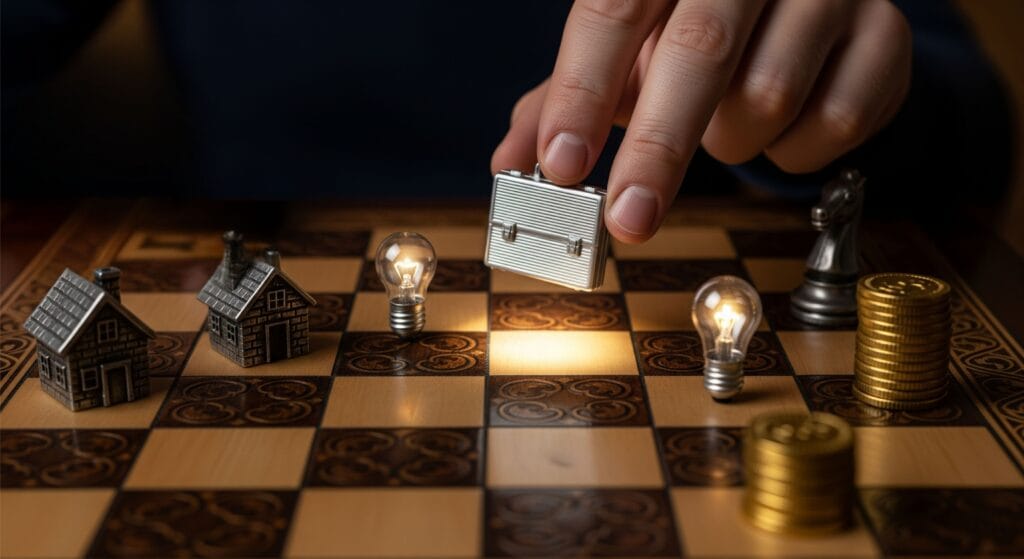
“Thinking End-Game First” : Setting and Achieving Long-Term Goals
In chess, a good player always has the endgame in mind, even from the very first move. They know what kind of board position they want to achieve 20, 30, or even 40 moves down the line. They make decisions in the present based on that desired future. This is called “prophylactic thinking” or “thinking backward.”
Now, apply this to your life. Where do you want to be in five years? Ten years? What does your ideal “endgame” look like? Do you want to be financially independent? A leader in your field? Running your own business?
Most people drift through life reacting to what’s in front of them. The chess player’s approach is to define the endgame first and then work backward to figure out the steps needed to get there.
- Your “Endgame” is Your Vision: Clearly define your long-term goal. Write it down. Make it specific.
- Your “Middlegame” is Your Strategy: What major milestones do you need to hit to reach that goal? If your endgame is starting a business, your middlegame might involve gaining specific industry experience, saving a certain amount of capital, and building a professional network.
- Your “Opening” is Your Daily Action: What do you need to do today, this week, this month? These are the small, consistent moves that set up your entire strategy. It might be taking an online course, networking with one new person each week, or automating your savings.
By thinking “end-game first,” you stop being a passive participant in your life and become a strategist. You make choices with intention, always asking, “Does this move get me closer to my checkmate?” This mindset shift is one of the most profound lessons that comes from the journey of mastering chess.
“Controlling the Center” : Prioritizing What Matters Most
In chess, the player who controls the four central squares of the board often controls the entire game. From the center, your pieces have maximum mobility and influence. They can strike out in any direction. The center is the most valuable real estate on the board.
What is the “center” of your life? It’s your highest-impact activities. It’s the 20% of your efforts that generate 80% of your results (the Pareto Principle). These are the non-negotiables, the things that, if you do them consistently, will have the biggest positive impact on your success and happiness.
This could be:
- In Your Career: The one or two key projects that will get you noticed for a promotion.
- In Your Health: Your daily workout and your commitment to healthy eating.
- In Your Personal Growth: Your habit of reading every day or practicing a skill.
So many of us get distracted by “flank attacks”—urgent but unimportant emails, minor tasks, other people’s priorities. We’re busy, but we’re not effective. We’re playing on the edge of the board.
Applying this chess strategy for life means consciously identifying your “center” and fiercely protecting it. You prioritize these core activities above all else. You schedule them, you build routines around them, and you learn to say “no” to things that pull you away from them. When you control the center of your life, you operate from a position of strength, mobility, and influence, just like a Grandmaster.
“The Art of the Sacrifice” : Making Calculated Risks
This is a concept that truly separates beginners from masters. In chess, a “sacrifice” is when you intentionally give up a piece for what you hope will be a greater long-term advantage. You might sacrifice a pawn to open up a line of attack, or even sacrifice a powerful piece like a rook to expose the enemy king. It looks like a loss, but it’s actually a strategic investment.
Life is full of necessary sacrifices. You can’t have it all, all at once. To achieve something great, you often have to give up something good.
- Sacrificing Time: You might sacrifice your evenings and weekends for a year to study for a certification that will double your salary.
- Sacrificing Comfort: You might sacrifice the security of a steady paycheck to start your own business. It’s risky and uncomfortable, but the potential payoff is enormous.
- Sacrificing Money: You might sacrifice spending on luxuries to invest in your education, your health, or your financial future. A great example is investing in a high-quality ergonomic office chair to protect your long-term health.
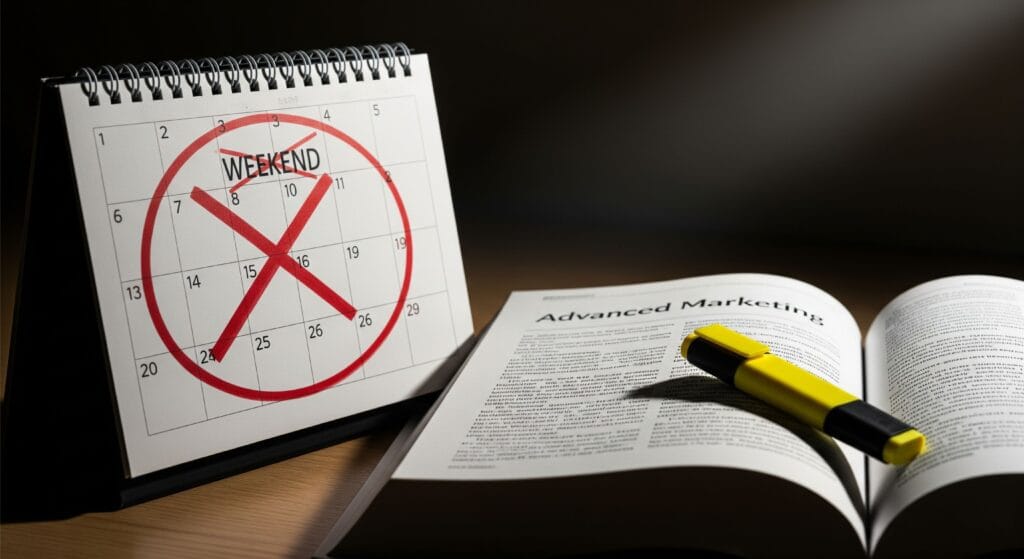
The key word here is “calculated.” A sacrifice isn’t a random, hopeful blunder. It’s a well-thought-out risk. The chess player analyzes: “Is what I’m gaining worth more than what I’m giving up?” This strategic mindset allows you to make bold, forward-thinking decisions. You stop being afraid of short-term losses when you can clearly see the path to a long-term victory. You learn that sometimes, the only way forward is to give something up.
“Developing Your Pieces” : Investing in Your Skills and Relationships
In the opening of a chess game, you don’t just charge forward with one or two pieces. That’s a recipe for disaster. Instead, you “develop” all of your pieces. You move your pawns to control the center, bring your knights and bishops into the game, and get your king to safety. You activate your entire army so that all your pieces are working together in harmony.
Think of your life’s “pieces” as your various assets:
- Your Skills: Your professional abilities, your hobbies, your knowledge.
- Your Health: Your physical and mental well-being.
- Your Finances: Your savings, investments, and earning potential.
- Your Relationships: Your network of friends, family, mentors, and colleagues.
A common mistake in life is to hyper-focus on developing just one piece—usually your career—while neglecting the others. You might get a promotion, but your health suffers, and your relationships wither. Your position becomes unbalanced and vulnerable.
This chess strategy for life teaches you the importance of holistic development. You need to invest in all your “pieces.”
- Read books and take courses to develop your skills ( our Blog has some great recommendations, like our list of Top 10 Empowering Books for Women).
- Prioritize sleep, nutrition, and exercise to develop your health ( check out our guide to Fun At-Home Workout Tools ).
- Create a budget and an investment plan to develop your finances.
- Nurture your relationships by investing time and energy in the people who matter.
When all your pieces are developed, you have more options, more power, and more resilience. You’re not relying on a single piece to win the game; you have a whole coordinated army working towards your success.
Getting Started: Your First Moves in the World of Chess (2025 Edition)
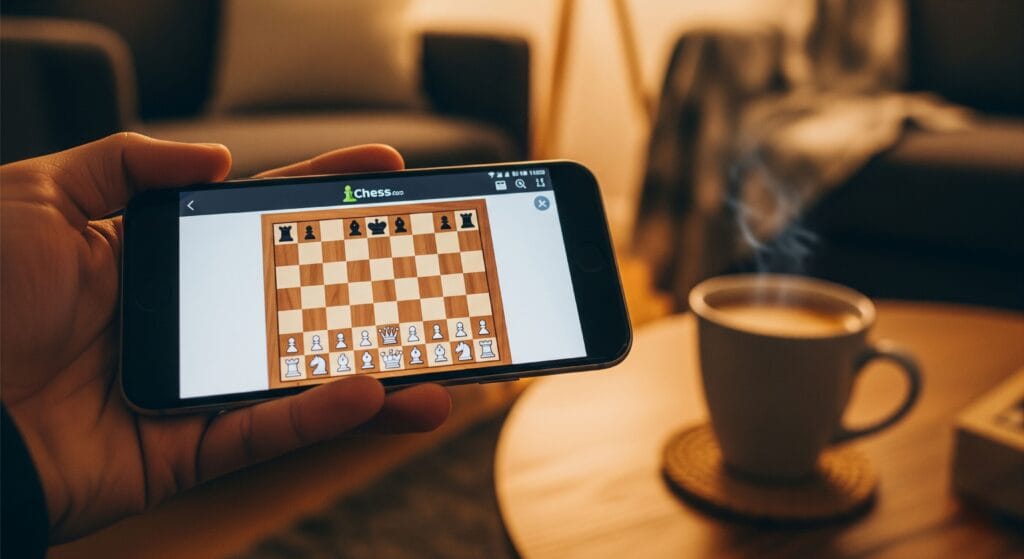
Alright, are you feeling inspired? Are you ready to make your first move? We get it, starting something new can feel daunting. The world of chess can seem like a secret club with its own language and traditions. But trust us, it’s more accessible now than ever before. You don’t need a stuffy chess club or an intimidating tutor. All you need is a smartphone and a little curiosity. Let’s make this super simple. Here’s your practical guide to how you can learn chess online today.
The 3 Best Apps for Learning Chess
The digital revolution has been amazing for chess. High-quality instruction is now available right at your fingertips. Forget dusty old books with confusing diagrams. These apps are interactive, fun, and designed for beginners.
- Chess.com: This is the undisputed king of the online chess world. It’s a one-stop shop. The app has a fantastic “Lessons” section that takes you from the absolute basics (how the pieces move) to advanced strategies. It’s filled with interactive drills, videos, and puzzles. Plus, it has a massive community, so you can always find a game against someone at your skill level. You can start for free, but a premium Chess.com subscription unlocks a world of learning tools and is worth every penny if you get serious.
- Lichess.org: Lichess is the awesome, 100% free, open-source alternative to Chess.com. It’s run by a non-profit and has a clean, ad-free interface. Its “Practice” section is brilliant for beginners, with modules on every aspect of the game. The “Puzzle Streak” and “Puzzle Storm” features are incredibly addictive and are one of the best ways to improve your tactical vision. Seriously, it’s an amazing resource, and it costs nothing.
- Dr. Wolf Learns Chess: This app is a little different and, frankly, genius for beginners. It’s like having a friendly chess coach sitting next to you. You play against an AI character, Dr. Wolf, who gives you feedback in plain English as you play. If you make a mistake, he’ll gently explain why it was a mistake and suggest better ideas. It’s a less intimidating way to play your first few games and learn the “why” behind the moves.
Understanding the Basic Rules (in Plain English)
Don’t get bogged down in the official rulebook. Here’s all you need to know to start.
- The Goal: The whole point is to “checkmate” your opponent’s King. This means the King is under attack (in “check”) and has no way to escape. That’s it. You win.
- The Pieces (Your Army):
- The King: The big guy. He’s the most important but also one of the weakest. He can only move one square in any direction.
- The Queen: The powerhouse. She can move any number of squares in any direction (horizontally, vertically, or diagonally). She’s your super-soldier.
- The Rooks (x2): The castles. They move any number of squares horizontally or vertically. Think of them as straight-line tanks.
- The Bishops (x2): The pointy-hat guys. They move any number of squares diagonally. You have one that stays on light squares and one that stays on dark squares.
- The Knights (x2): The horses. Their move is the weird one: an “L” shape. Two squares in one direction (horizontal or vertical) and then one square to the side. They are the only pieces that can jump over other pieces!
- The Pawns (x8): The little guys on the front line. They move forward one square at a time (but can move two squares on their very first move). They capture diagonally. They are the soul of chess.
That’s basically it! You can learn the couple of special moves like “castling” and “en passant” as you go. The apps above will teach you this stuff in about 15 minutes. The best way to learn is just to play.
Where to Play Your First Game Online
The thought of playing a human can be scary. What if you lose in four moves? Who cares! Every single Grandmaster on the planet started out as a total beginner who lost games. Losing is how you learn.
Both Chess.com and Lichess.org are the perfect places to start. When you sign up, you’ll play a few introductory games, and the system will give you a rating. This is a number that represents your skill level. The beauty of this is that the platform will then match you against other players with a similar rating.
This means you won’t be thrown to the wolves. You’ll be playing against other beginners who are also learning the ropes. It’s a level playing field. Our advice? Choose a longer time control for your first few games. Something like “15 | 10” (15 minutes for the game, with a 10-second increment added after each move) is great. It gives you time to think without feeling rushed. If you want a physical experience, getting a simple beginner’s chess set and playing with a friend is also a fantastic way to start.
Staying Inspired and Geared Up
Once you get the hang of the basics, you’ll want to plug into the wider chess world. It’s a fantastic way to stay motivated. For this, you absolutely can’t go wrong with a resource like ChessBase India. Think of it as the ultimate chess news station, full of stories about rising stars, tournament news, and interviews that really capture the passion of the game. Following their website ( chessbase.in ) is a great way to turn a new hobby into a real passion.
And when you’re ready to level up your gear from a simple beginner’s set, or perhaps dive into powerful chess software to analyze your games, their online store ( shop.chessbase.in ) is a trusted place for high-quality products. They have everything from beautiful chess sets to the professional software that grandmasters use.
Conclusion: Your Move
We’ve covered a lot of ground. We’ve seen that chess is far from a mere distraction for intellectuals. It’s a powerful tool for self-improvement. It’s a mental workout that boosts your memory, sharpens your problem-solving skills, unleashes your creativity, and forges an unbreakable focus. More than that, the journey to mastering chess provides you with a rich set of strategic models—thinking end-game first, controlling the center, making calculated sacrifices, and developing all your pieces—that can revolutionize how you approach your career, your goals, and your life.
This isn’t about becoming a world champion. It’s about becoming a sharper, more strategic, and more intentional version of yourself. It’s about embracing a lifelong journey of intellectual and personal growth, one move at a time. The board is set, the pieces are waiting. The beautiful thing about chess is that it’s never too late to start.
So, what are you waiting for? Your move.
Ready to begin your journey? Download one of the recommended apps today and play your first game! And if you want to learn more about leveling up your life, check out our other articles on the Blog or learn more about our mission on our About page. Have questions? Feel free to Contact Us!